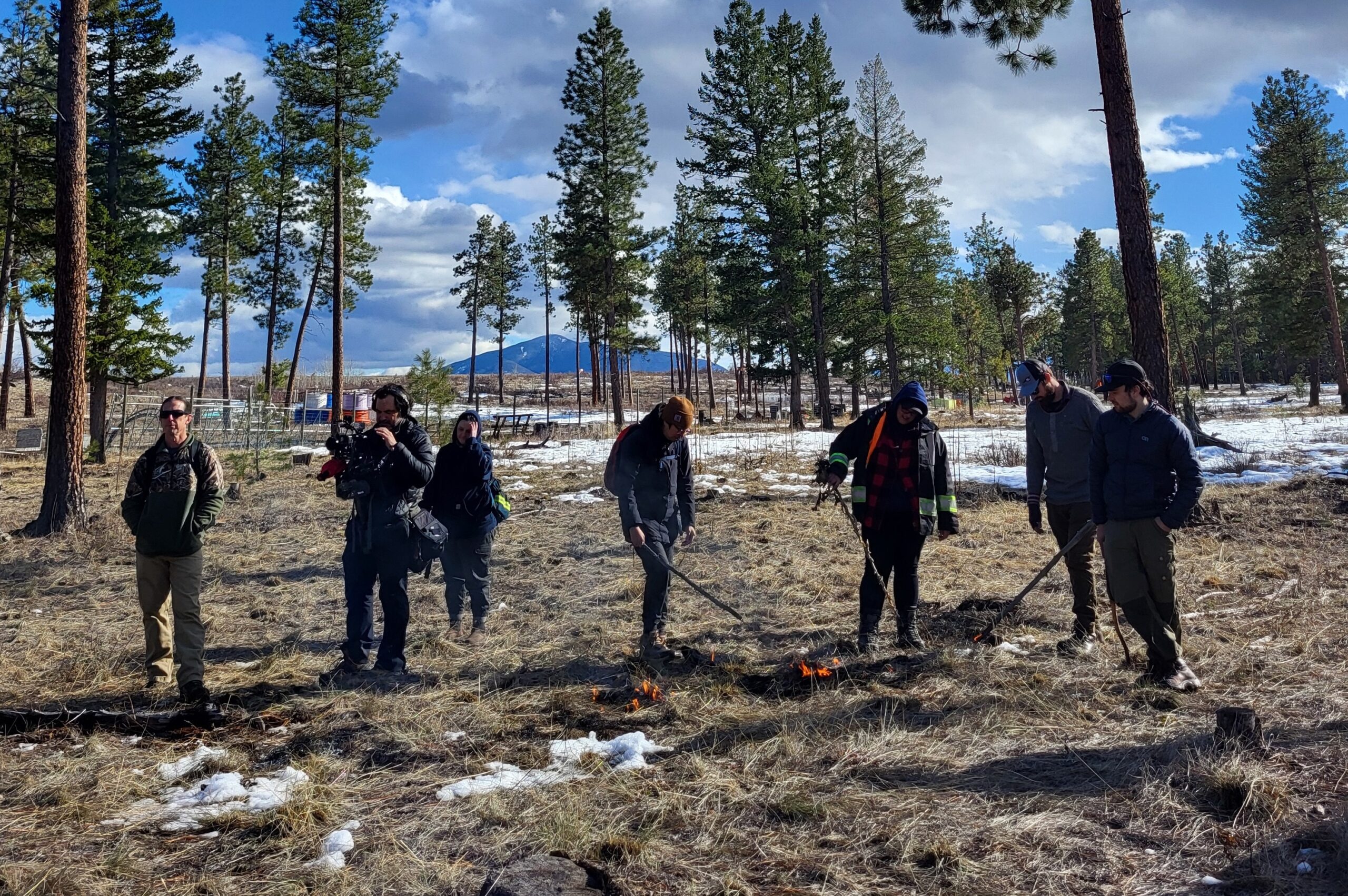
The FNESS Cultural and Prescribed Fire team travelled to Ktunaxa Territory this past March for a three-day workshop focusing on the ADAPT2 Cultural Fire Effects Monitoring (FEMO) Workbook. The purpose and intent of the workshop was a follow-up on a promise to reconvene after a similar workshop held back in Merritt in 2023 where discussions around good fire were had.
The workshop welcomed back participants who attended the first as well as seeing new faces. Each day was broken into a morning discussion and afternoon field visit. With just over thirty participants, folks had roots from across the province, as well as a few from tribes in modern California, Oregon, and as well as a couple friendly faces from Australia.
Sharing Knowledge from Around the World
While the workbook was given to participants at the workshop, the key focus was to engage in open dialogue around cultural fire practices in North America as well as in Australia. The draft workbook was meant as a guiding principle for the afternoon outings where participants were asked questions to look at each of the seven worksheets.
While the territory still had snow on the ground, participants were encouraged to speak through cultural burning practices as well as to demonstrate live fire exercises. This fire on the landscape is nothing near the prescriptive process the BC Wildfire Service administers to the landscape, but rather a glance at what returning to the land could look like. Has looked like for many indigenous groups.
Recognizing the Spiritual Components of Cultural Fire
The morning of day one was a brief overview of the FNESS CRx team, the ADAPT project, as well as hearing from Dr. Amy Cardinal Christianson and Bob Gray and their work on ADAPT1 and ADAPT2. After the participants were given a snapshot into the world of ADAPT, Dr. Frank Lake of the USDA spoke about the significance of spirituality in cultural fire. A key takeaway, for me, from his session is that cultural fire may have spiritual components that are not recognized by the overseeing governing bodies at play.
Day two had the local Ktunaxa, Max Andrew, deliver a presentation regarding the different fires on the land over the past decade. From prescription burns to battling wildfires, and the significance a well-maintained forest can have on such events, the presentation is one of pride regarding the collaborative work between the Ktunaxa, BCWS, and other local groups and what they can accomplish together when they integrate forest management. Afterwards, we heard from Indigenous Australians and similar work ongoing oversees.
A Forest in Two Parts
For the final day, Dr. Don Hankins, Elizabeth Azzuz, and Jessica Angel spoke about different cultural fire practices ongoing in their respective locales along the Pacific Northwest.
The field portion of the workshop saw a forest in two parts, one that had undergone a fuel treatment in the fall and one requiring another treatment soon. The first zone is an area near Cranbrook airport that had a prescription burn a few years ago. The treatment zone had trees thinned to a more precontact standard and would require another burn quite soon. Bob Gray is leading a ton of work in the area and had us stop here to ponder the overlapping Venn diagram of cultural fire and prescribed fire. Nations, such as the Ktunaxa, had burned areas like this in the past for specific objectives. The prescriptive fire given to the landscape here is based on Western forestry practices. For the nation’s wants and needs, now known as cultural objectives, the only difference is modern science is rarely willing to listen to elders, fire practitioners, and oral traditions. The work in Ktunaxa is to push these old practices aside and pave the way for more collaborative work in maintaining healthy forest ecosystems.
Fire is Medicine
Another portion of the field visit was to listen to and learn from the partners that travelled from afar. While landscapes and biodiversity may change from location to location, the overwhelming voice is that fire is medicine. And that the land has become sick due to many things including fire exclusion, forestry practices, urban development, and a wide range of modern symptoms, but with appropriate treatment and a return of medicine to the landscape, together we can begin to heal the forests. Through the land healing, nations can begin to revitalize what it means when they practice cultural fire.
Learn More
If you have any questions about cultural and prescribed fire, please contact the FNESS Cultural & Prescribed Fire Team.
 News
News Library
 Videos